
FRAME DOSSIER / CONCEPT
Anchor Fist
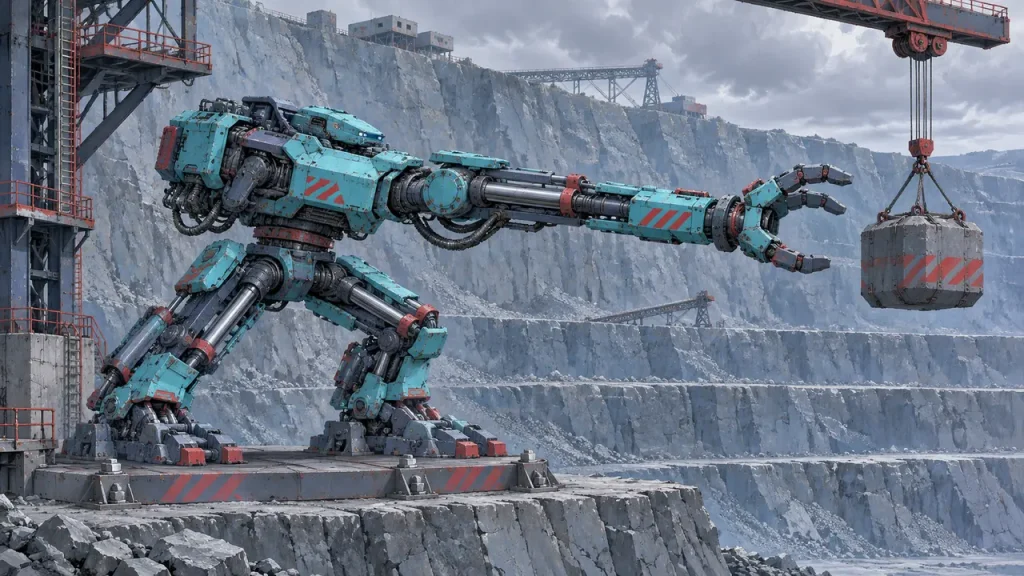
Anchor Fist studies a heavy frame that gains force by giving something up. Planting the machine against the ground can change the outcome of a hydraulic strike, but it also commits the pilot to a position. The proposed combat loop asks when a brace is worth that loss of movement and how to recover after the impact. Terrain is part of the decision, not a promise that every surface can be destroyed.
Find support before seeking impact
The opening action is a reading of the arena. A wide platform offers a different stance from a broken edge or a narrow service lane. The pilot chooses where to plant the frame and how much room to leave for releasing the brace. These differences need a clear visual language: substantial supports, damaged boundaries and obstructed exits should be recognisable before an attack begins. A hidden surface-strength statistic would undermine the intended relationship between observation and commitment.
Brace, strike and release
The central sequence has three distinct phases. Bracing establishes a stance and makes its limitation visible. The strike transfers force through that stance and changes the opponent’s position. Releasing restores mobility, but not necessarily in the direction the pilot now wants. This final phase is essential. If the frame can cancel freely into movement after every impact, the brace loses its meaning. If release is slow without warning, it feels like an arbitrary punishment for using the core mechanic.
Displacement creates the next exchange
An impact should matter through what it makes possible. Moving an opposing frame away from a narrow passage can create a route; pushing it against a support can change the follow-up angle. The concept does not need exaggerated destruction to make those consequences legible. The ground response note considers how dust, contact marks and stance changes can describe the result without obscuring the actors or inventing a fully simulated environment.
A quarry converted into a proving ground
The proposed setting combines broad stone terraces with industrial anchor plates and abandoned lifting equipment. This gives the player a vocabulary of natural edges and engineered supports. The initial arena should contain only a few clearly differentiated surfaces, allowing the pilot to learn their implications before a more complicated route is introduced. A return to the same terrace from another angle can reveal a new tactical question without requiring a new rule.
Read the opposing commitment
Other frames need postures that distinguish an approaching threat from a committed attack. The player should be able to decide whether to hold the brace, release early or accept a weaker strike to preserve an exit. The recovery study offers a related comparison from Heatbreak: an action’s value depends on where it leaves the machine. In Anchor Fist, that idea is expressed through support and stance rather than primarily through thermal pressure.
Scope and visual direction
The artwork combines cyan structural armor, slate support assemblies and small red warning elements. It should show feet, contact points and hydraulic connections clearly enough to communicate a machine bearing load. Anchor Fist is a concept, with no announced release date, playable version or external reviews. The first proposed trial would test one brace, one displacement and one understandable release. Only after those relationships are readable would more surfaces or attack variants become useful additions.